On 20 April 2019, a French charity fundraising platform, Alvarum, moved its donors' money onto our first payment system. It served 2,000+ charities from one pooled account, with €56M in balances to migrate. We checked every historical transaction first. It went live on the planned date, with no production bug at its first event.
The lesson we still work by: the hard part is not the code. It is knowing whose money it is at every step, and proving it to an auditor. Neti started in 2010 as an enterprise software company. From 2019 we also built blockchain infrastructure and kept seeing the same gap: promising prototypes, few systems ready for real money.
2025: bank rails and stablecoin rails as one operation. Damisa, a British cross-border payments company, needed both rails to work as one. Each rail defined a payment's status differently, and one euro payment touched five balances. We built the payment orchestration layer: every step got an owner, a ledger entry and an exception path, reconciled daily against partner balances. A team of six took it to production in 4.5 months.
No single person can create money. A payment company launching its own stablecoin needed that rule built in. On the issuance platform we built, every mint needs several independent approvals and can never exceed the reserve. Its payments stay private on a public network, and auditors can still read them through a key that needs several approvals.
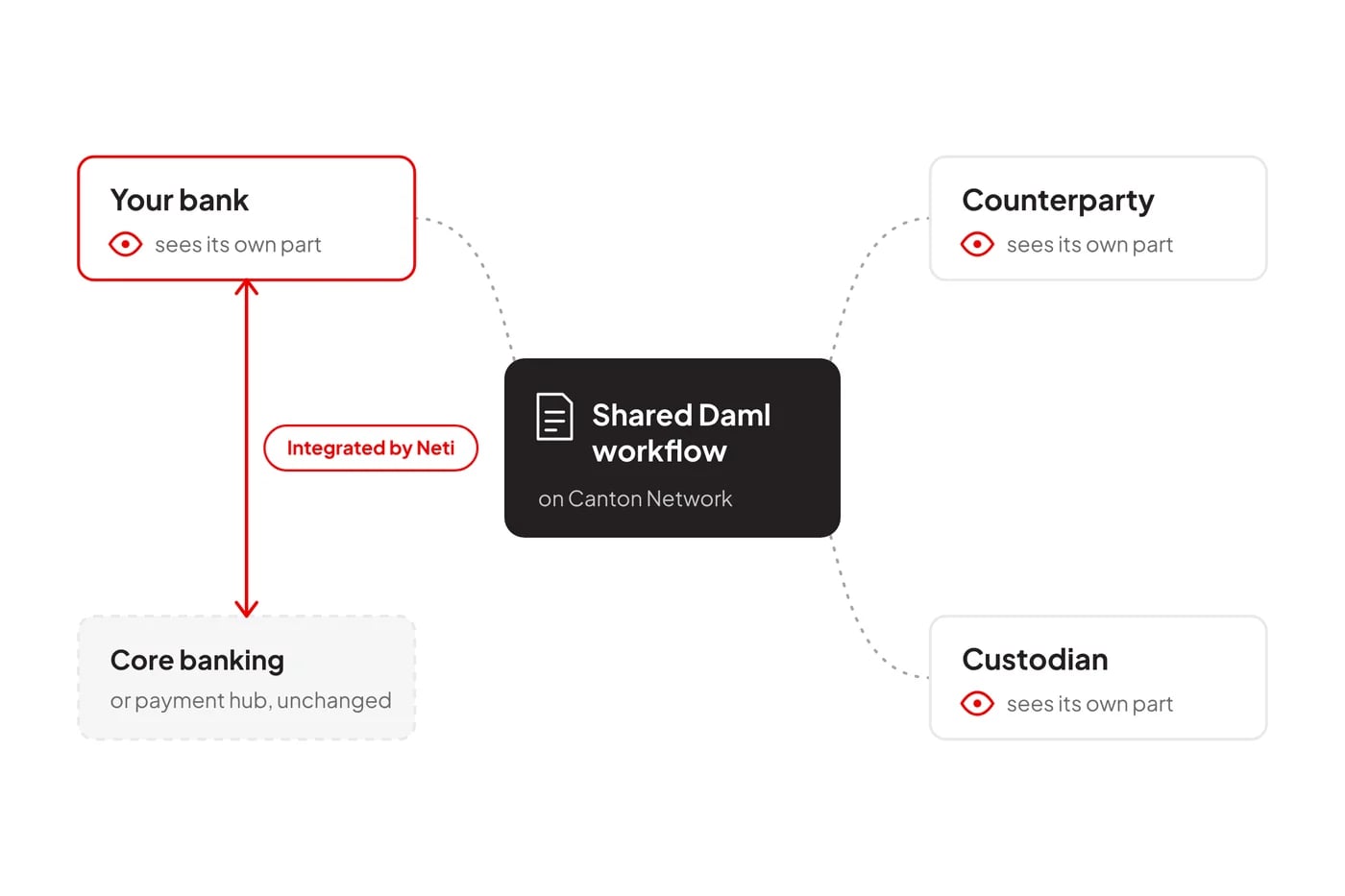
Today payments and digital assets are our core focus. We add the stablecoin payments layer next to your payment hub or behind your core banking, so you replace neither. In 2026 we also launched NetiRails, our own stablecoin payment orchestration platform, for institutions that want to run it on their own infrastructure.