





Not exactly. Zero Knowledge Proofs are one possible privacy technology layer, but blockchain privacy is a broader architectural problem. This page focuses on how to design systems that combine confidentiality, access control, auditability, and compliance in a way that can work in real products and operations.
Blockchain Privacy Architecture for Systems Where Transparency Creates Risk
We design privacy architecture for blockchain systems that need confidentiality, controlled visibility, and compliance, without breaking trust or operations.
Public transparency is not always a feature. Sometimes it is a business risk.
Public blockchain systems are transparent by default. Many real financial, enterprise, and operational systems are not. Once a product needs to protect sensitive counterparties, commercial terms, internal workflows, ownership logic, or transaction visibility, public-by-default design starts creating friction. The challenge is rarely privacy alone. It is how to combine confidentiality, access control, auditability, and operational usability inside one coherent system.
- visible counterparties
- exposed balances or positions
- leaked business relationships
- transparent pricing logic
- operational visibility competitors can infer
- regulatory discomfort without proper controls
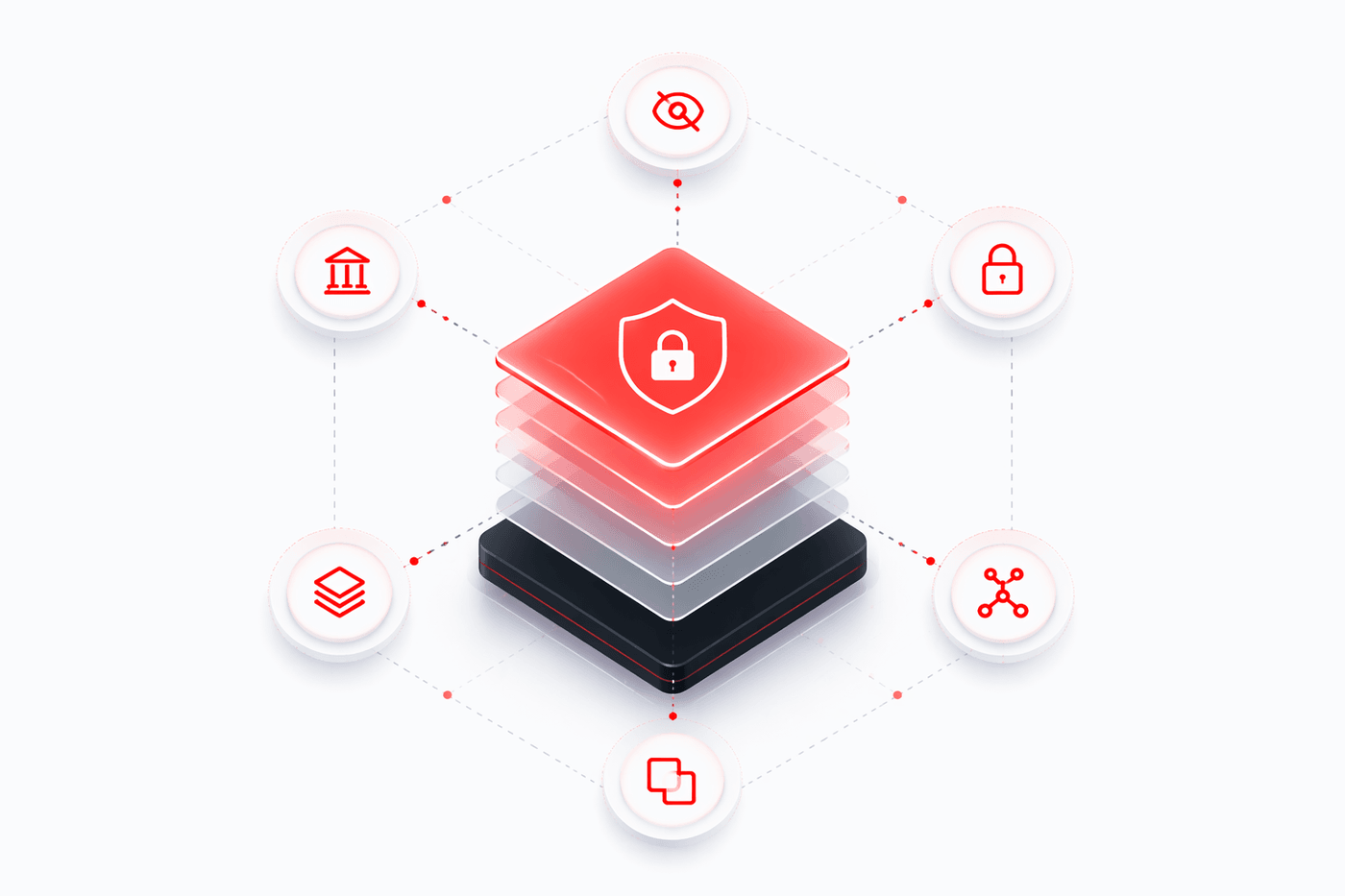
Privacy Technologies We Use When the Architecture Requires It
Not every privacy challenge needs the same solution. Depending on your product model, compliance needs, user flows, and system constraints, privacy architecture may involve selective disclosure, permissioning, confidential off-chain layers, hybrid models, or zero-knowledge proofs.
Explore Zero Knowledge Proof Solutions